Other

City/Municipality
Vancouver
Memorial Number
59026-006
Type
Location
Ferguson Point, Stanley Park
in Canada
Yes
GPS Coordinates
49.3006965, -123.1579402
Inscription

B.C. BRANCH
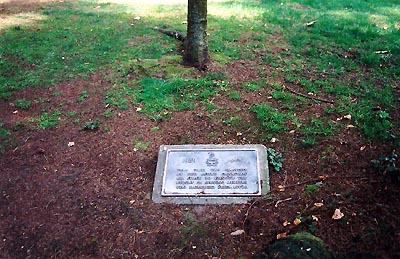
BURMA STAR
ASSOC

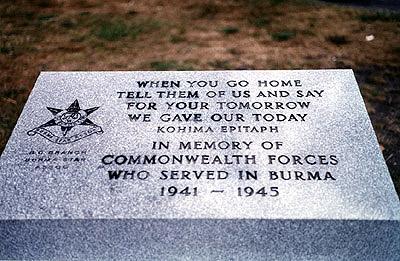
WHEN YOU GO HOME
TELL THEM OF US AND SAY
FOR YOUR TOMORROW
WE GAVE OUR TODAY
KOHIMA EPITAPH

IN MEMORY OF
COMMONWEALTH FORCES
WHO SERVED IN BURMA
1941-1945

Image
Photo Credit
Terry MacDonald
Caption
top view
War or Conflict Term
Province
!4v1622485624139!6m8!1m7!1s-IcbGKGKJgwKGCjnmowgCQ!2m2!1d49.30069649241507!2d-123.1579401963619!3f279.02176399636766!4f-7.808263685873925!5f2.363207800410501
Body Content

This memorial is dedicated to Commonwealth Forces who served in Burma. It was erected by the B.C. Branch of the Burma Star Association.

City
Vancouver
Country
Type Description
Plaque
Memorial CF Legacy ID
5134
City/Municipality
Vancouver
Memorial Number
59026-005
Type
Location
Ferguson Point, Stanley Park
in Canada
Yes
GPS Coordinates
49.3008415, -123.1578632
Inscription

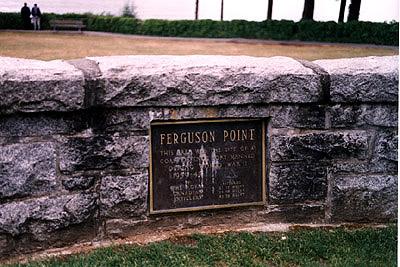
FERGUSON POINT
THIS AREA WAS THE SITE OF A
COAST DEFENCE FORT MANNED
DURING WORLD WAR II

THE ROYAL
CANADIAN
ARTILLERY
BATTERIES
31 ST HEAVY
38 TH HEAVY
85 TH HEAVY

Image
Photo Credit
Terry MacDonald
Caption
front view
War or Conflict Term
Province
!4v1622484906000!6m8!1m7!1sQ6i4zPLkATjpwbwY0fw0HQ!2m2!1d49.30084148434656!2d-123.1578631852748!3f347.0853242997013!4f-0.14021790858269867!5f3.325193203789971
Body Content

This memorial is dedicated to the Royal Canadian Artillery from the Second World War.

City
Vancouver
Country
Type Description
Plaque
Memorial CF Legacy ID
5133
City/Municipality
Vancouver
Memorial Number
59026-004
Type
Location
Stanley Park
in Canada
Yes
GPS Coordinates
49.3001888, 0
Inscription

[sign/enseigne]

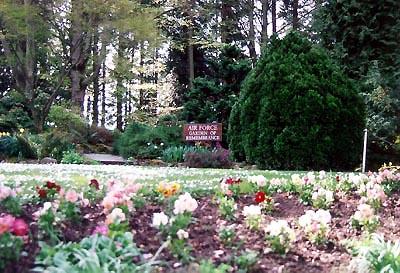
AIR FORCE
GARDEN OF
REMEMBRANCE

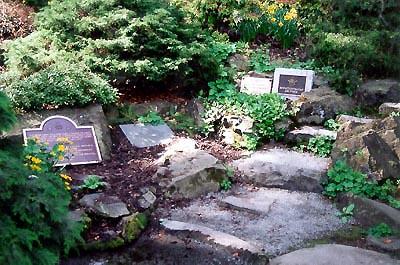
[plaque]

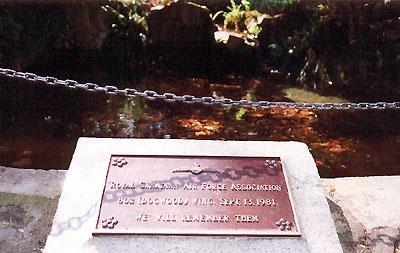
ROYAL CANADIAN AIR FORCE ASSOCIATION
802 (DOGWOOD) WING SEPT. 13, 1981
WE WILL REMEMBER THEM

[plaque]

1939 1945
THIS TREE WAS PLANTED
BY THE ROYAL CANADIAN
AIR FORCE TO HONOUR THE
MEMORY OF SERVING MEMBERS
WHO SACRIFICED THEIR LIVES.

[plaque]

ROYAL AUSTRALIAN
AIR FORCE

(needs further research/recherche incomplète)

Image
Photo Credit
Thomas Donovan
Caption
garden view
1 of 4 images
Image
Caption
garden view (plaques)
1 of 4 images
Image
Caption
plaque (dedicating tree)
1 of 4 images
Image
Caption
plaque (Royal Canadian Air Force Association)
1 of 4 images
War or Conflict Term
Province
!4v1730121695795!6m8!1m7!1sigDQ_3zA2NQpe1UeOcSiQg!2m2!1d49.30018875192875!2d-123.1341566966311!3f244.6974198213539!4f-8.657637387373356!5f0.7820865974627469
Body Content

The Air Force Garden of Remembrance, also known as the Air Force Grove, was established by the Women’s Auxiliary to Air Services in 1948 to commemorate the airmen who gave their lives in the Second World War. It is a shade garden, contributing to the contemplative tone of the memorial. It is also a rock garden, and features the planting of various species of flowers and shrubs around a small stream and pond, set off by flagstone steps and path. The garden is a living memorial, symbolic of the sacrifice of the armed forces. There are a variety of plaques placed throughout the garden.

City
Vancouver
Country
Type Description
Garden
Memorial CF Legacy ID
4214
City/Municipality
Vancouver
Memorial Number
59026-003
Type
Address
601 W Cordova Street
Location
Waterfront Station
in Canada
Yes
GPS Coordinates
49.2851936, -123.1115865
Inscription

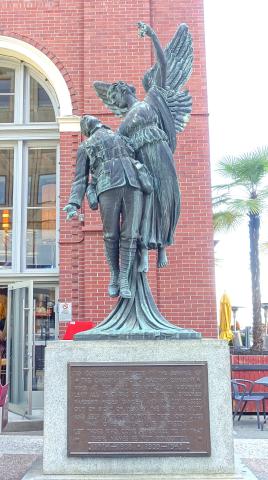
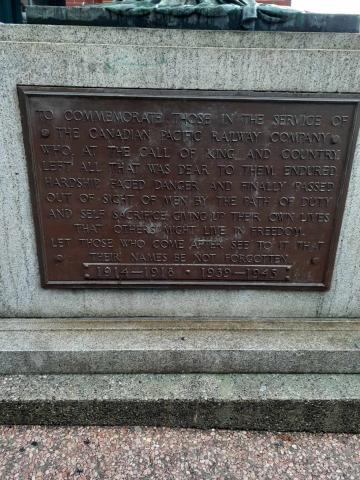
TO COMMEMORATE THOSE IN THE SERVICE OF
THE CANADIAN PACIFIC RAILWAY COMPANY
WHOM AT THE CALL OF KING AND COUNTRY
LEFT ALL THAT WAS DEAR TO THEM, ENDURED
HARDSHIP, FACED DANGER AND FINALLY PASSED
OUT OF SIGHT OF MEN BY THE PATH OF DUTY
AND SELF SACRIFICE, GIVING UP THEIR OWN LIVES
THAT OTHERS MAY LIVE IN FREEDOM.
LET THOSE WHO COME AFTER SEE TO IT THAT
THEIR NAMES ARE NOT FORGOTTEN.

1914—1918  1939—1945

Image
Caption
Winged Victory
1 of 4 images
Image
Caption
statues
1 of 4 images
Image
Photo Credit
Veterans Affairs Canada
Caption
inscription
1 of 4 images
Image
Caption
statue
1 of 4 images
War or Conflict Term
Province
!4v1622482347883!6m8!1m7!1s6vcNfA-m3p_yrxd9G6rw5w!2m2!1d49.28519357339892!2d-123.1115865430668!3f59.40894904350147!4f1.6410752297352786!5f1.7928286761869127
Body Content

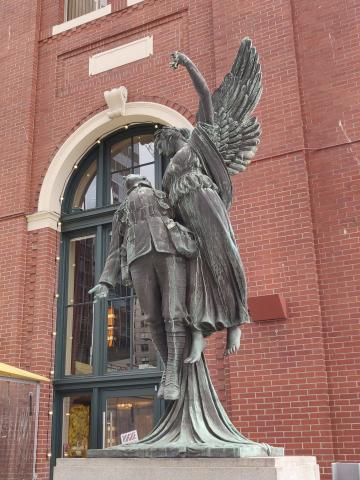
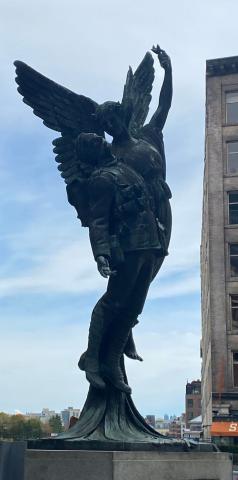
Winged Victory was erected by the Canadian Pacific Railway in the memory of its employees who were killed during the First World War. It was unveiled by Lieutenant-Governor of British Columbia, W.S. Nichol on 28 April 1922.

The Canadian Pacific Railway commissioned three Winged Victory statues from Montreal sculptor Coeur de Lion MacCarthy to commemorate the 1,116 employees it lost in the First World War. All three statues were unveiled simultaneously on the same date. The statue depicts an angel carrying a deceased soldier to heaven at the moment of his death. The angel originally held a laurel wreath, the symbol of victory, in her upraised hand. The other two identical memorials are in Montreal and Winnipeg

After the Second World War, the dates 1939 - 1945 were added.

When bronze is placed outside, like this statue is, over the years it gradually acquires a patina. Exposure to air gradually changes the bronze to green; sea air and pollution hasten the process. Rain, saturated with chemicals, shows up as streaks on the bronze. Such a patina is either valued or, if not appreciated, can be prevented from the beginning by regularly washing and waxing the statue. In 1967, some concerned citizens were horrified by what they called a "dirty" statue and with wire brushes and detergent tried to scrub the dirt off. Scratch marks from their cleaning tools can still be seen.

Coeur de Lion MacCarthy, the son of sculptor Hamilton McCarthy, produced numerous commemorative works after the First World War, including: Winged Victory in British Columbia; Great War Memorial and Lethbridge Cenotaph in Alberta; Winged Victory in Manitoba; County of Brome War Memorial, Verdun Victory MemorialMonument to the Brave and Winged Victory in Quebec; Clifton Hill War Memorial and Woodstock Cenotaph in Ontario.

City
Vancouver
Country
Type Description
Shaft, statue - bronze
Memorial CF Legacy ID
4215
City/Municipality
Vancouver
Memorial Number
59026-002
Type
Address
200 W Hastings Street
Location
Victory Square
in Canada
Yes
GPS Coordinates
49.2825862, -123.1097552
Inscription

Facing Hastings Street:
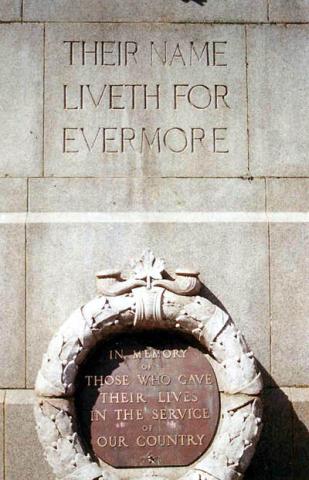
"Their name liveth for evermore" and,
within a stone wreath, "1914-1918."

Facing Hamilton Street:
"Is it nothing to you."

Facing Pender Street:
"All ye that pass by."

Image
Photo Credit
Thomas Donovan; Harry Palmer; Hellmut Shade
Caption
detail of wreath
1 of 5 images
Image
Caption
front view with flags from side
1 of 5 images
Image
Caption
front view
1 of 5 images
Image
Caption
shaft (right side)
1 of 5 images
Image
Photo Credit
Victoria Edwards
Caption
Post Card
1 of 5 images
War or Conflict Term
Province
!4v1622480524257!6m8!1m7!1swqSHXAWkRgKJYVxBNVmmYw!2m2!1d49.28258623911707!2d-123.109755225122!3f240.8312426717516!4f4.564481138556459!5f0.9849158773971788
Body Content

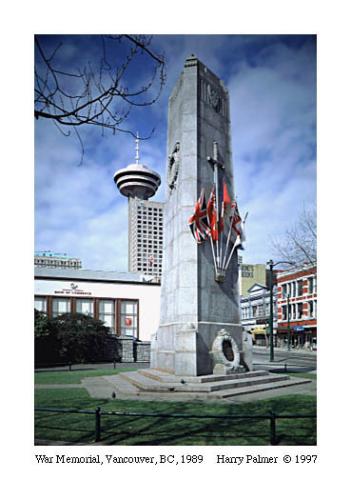
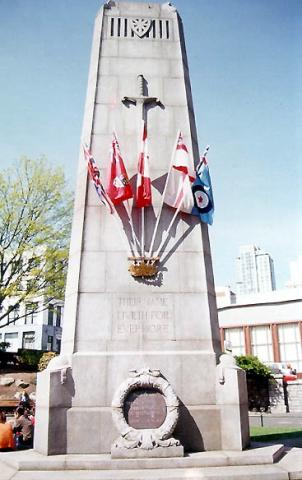
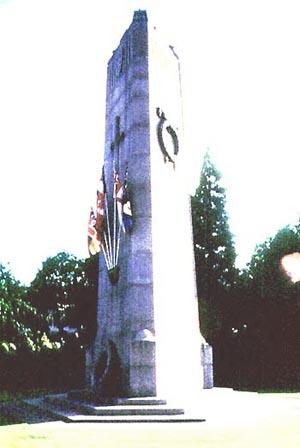
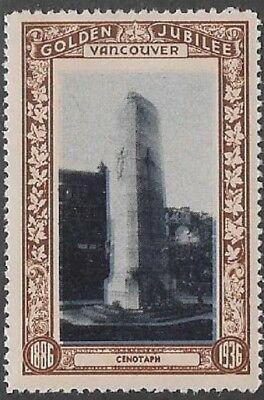
This Cenotaph commemorates those who were among the men who, at call of King and Country, left all that was dear, endured hardship, faced danger, and finally passed from the sight of men by the path of duty, giving their own lives that others might live in freedom. Let those who come after see to it that their names be not forgotten. The war memorial in Vancouver is a gray granite obelisk, thirty feet high, at the foot of a gentle slope in a small park, Victory Square, on nine-tenths of an acre of green lawn, with ornamental trees and flower beds. Victory Square is bounded by Hastings Street, a busy principal thoroughfare, Cambie, Pender and Hamilton streets and, due to its central location and keystone shape, has been styled the keystone of Vancouver, now, 1944, a metropolis ten miles wide by five deep, of 400,000 people. The Cenotaph was erected by public subscription in 1924, is of Nelson Island granite engraved with suitable inscriptions, and is kept continuously banked high with wreaths of flowers and adorned with national flags. The monument has three, not four, sides; one side faces Hastings Street, the others Pender and Hamilton Streets, and was designed thus by Major G.L. Thornton Sharp, architect, town planner, and park commissioner, to conform to the triangular shape of the park. It is so placed that, when approached from the east, it appears in the distance centrally at the end of busy Hastings Street. The granite was supplied by the Vancouver Granite Co., Ltd., and the erecting contractors were Messrs. Stewart and Wylie; Mr. Stewart died from the effects of an accident whilst preparing the memorial. The Vancouver War Memorial Committee of twenty-four, of which twelve represented the Canadian Club of Vancouver, and twelve the Civic War Memorial Committee, the whole under the chairmanship of F.W. Rounsefell, Esq., pioneer, and with J.R.V. Dunlop, Esq., of the Canadian Club, as honorary secretary, were the public-spirited sponsors. The Cenotaph cost $10,666.000. The first, commencing "Their name", is from Ecclesiasticus, 44th chapter, 14th verse, and, the second, commencing "Is it nothing", from Lamentations, chapter 1, verse 12. The word, "cenotaph" is derived from the Greek, "kenos", empty, and "taphos", a tomb, and means a tomb in memory of one buried elsewhere, i.e., an empty tomb. The ornamentations on the stone include one long sword and two wreaths, one of laurels, the other of poppies; both entwined with maple leaves. A stone replica of the steel helmet, as used in the war of 1914-1918, adorns three corner buttresses. A larger wreath of laurels surrounds the numerals "1914-1918" at the base of the front. Slots in a receptacle of three bronze maple leaves hold the staffs of the Union Jack, the White and Canadian Ensigns, always flying, which are placed there by the Canadian Legion, British Empire Service League, and renewed four times each year. The Cenotaph was unveiled by His Worship W.R. Owen, Mayor of Vancouver, in the presence of an assemblage of 25,000 persons, naval, military and civilian, and including the Old Contemptibles, 7th British Columbia, 29th Vancouver, 72nd Seaforths, 2nd Canadian Mounted Rifles, 47th New Westminster, and 102nd North British Columbian Battalions, C.E.F., and others, on Sunday, 27th April, 1924. It was dedicated by Hon. Major the Rev. Cecil C. Owen, M.B.E., V.D., D.D., chaplain of the 29th (Vancouver) Battalion, C.E.F., "To the Glory of God, and in thankful remembrance of those who served their King and Country overseas in the cause of truth, righteousness and freedom." The 24th Psalm was read by Hon. Lt.-Col. the Rev. G.O. Fallis, C.B.E., E.D., D.D., of the Methodist Church, and the music included "O Canada" (Buchan); "O God, Our Help in Ages Past"; "Lochaber No More" (bagpipes); "For All the Saints"; "Last Post" and "God Save the King". The first wreath, being the tribute of the Corporation and Citizens of Vancouver, was reverently placed by Mrs. W.R. Owen, wife of His Worship the Mayor. In his valedictory address, Major the Rev. Mr. Owen said: "Those whose sacrifices this Cenotaph commemorates, were among the men who, at call of King and Country, left all that was dear, endured hardship, faced danger, and finally passed out of the sight of men by the path of duty, giving their own lives that others might live in freedom. Let those who come after see to it that their names be not forgotten." J.S. Matthews, City Archives, City Hall, Vancouver, 1944.

City
Vancouver
Country
Type Description
Grey granite obelisk
Memorial CF Legacy ID
4216
City/Municipality
Vancouver
Memorial Number
59026-001
Type
Address
Stanley Park
Location
South side of Lumbermens' Arch Picnic Area, near back of Vancouver Aquarium
in Canada
Yes
GPS Coordinates
49.3010735, -123.1321562
Inscription

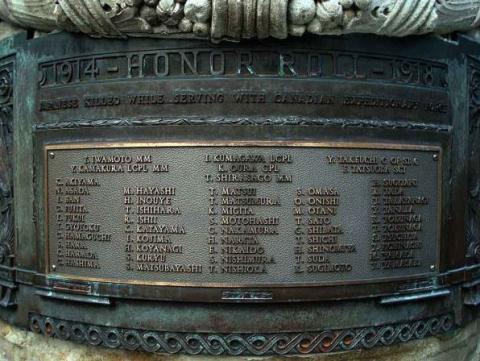
[front top plaque/plaque à la partie supérieure avant]
1914 - HONOR ROLL - 1918
JAPANESE KILLED WHILE SERVING WITH CANADIAN EXPEDITIONARY FORCE


[front bottom plaque/plaque en bas]

[base/bas]
ERECTED BY THE CANADIAN JAPANESE ASSOCN A.D.MCMXIX

AUG - 1917
AVION

AUG - 1917
LENS

APL - 1917 
VIMY RIDGE

OCT - 1916
THE SOMME

NOV - 1918
MONS

NOV - 1918
VALENCIENNES

OCT - 1918
DENAIN

OCT - 1918
CAMBRAI

SEP - 1918
ARRAS

AUG - 1918
AMIENS

OCT - 1917
PASSCHENDAEL

AUG - 1917
HILL 70

[base plaque/plaque en bas]
UNVEILED
BY
MAYOR GALE
9TH APRIL - 1920
ERECTED BY
THE CANADIAN JAPANESE ASSOCIATION
DURING THE PRESIDENCY OF
M.ABE

DESIGNED
BY JAMES.A. BENZIE
ARCHITECT
KEAST & ALLAN
STONE MASONS

[back plaque/plaque à l’arrière]
1914 - honor roll - 1918
JAPANESE WHO RETURNED WITH CANADIAN EXPEDITIONARY FORCE

  • (column 1/colonne 1)
  • D. ARAKI
  • M. ARAKI
  • K. CHIBA
  • S. CHIBA
  • C. CHUJO
  • T. DANJO
  • T. DATE
  • S. FUJI
  • T. FUJII
  • Y. FUKAYE
  • I. FUKUSHIMA
  • B. FURUKAWA MM
  • R. FURUYA
  • S. GOTO
  • B. HAMADE
  • T. HAMAMATSU
  • S. HARADA
  • M. HAYASHI
  • Y. HAYASHI
  • T. HIRAI
  • T. HIROTA
  • R. HOITA
  • K. HORITA
  • T. HOSHIZAKI
  • (column 2/colonne 2)
  • M. IHARA
  • K. IIZUKA MM
  • N. IKEDA
  • T. INOHARA
  • K. INOUYE MM
  • Z. INOUYE
  • I. ISOGAI
  • H. ISOMURA
  • K. IWASAKI
  • M. IWASAKI
  • S. IWASHITA
  • S. IZUKAWA
  • T. KAJI
  • O. KAMACHI
  • T. KAMEI
  • S. KANDA
  • M. KATAOKA
  • K. KATENO
  • K. KATO
  • Y. KAWAI
  • K. KAWASE
  • K. KIMOTO
  • S. KIMURA
  •  
  • (column 3/colonne 3)
  • S. KINOSHITA
  • H. KITAGAWA
  • T. KITAGAWA
  • H.S. KOBAYASHI
  • R. KOBAYASHI
  • S. KONDO
  • Y. KUBO
  • Y. KUBODERA MM
  • S. KUBOTA CPL
  • Z. KUBOTA
  • K. kURISU
  • T. KURODA
  • Y. KURODA
  • K. MATANO
  • K. MATSUDA
  • N. MATSUDA
  • K. MATSUMOTO
  • K. MATSUMOTO
  • Z. MATSUMOTO
  • T. MAYE
  • T. MIKURIYA
  • M. MITSUI SGT MM
  • T. MIYAGAWA
  • S. MIYAHARA
  • (column 4/colonne 4)
  • S. MIYAI
  • E. MIYATA
  • F. MORISHIGE
  • S. MOROOKA
  • M. MOTOIKE
  • N. MURAKAMI
  • S. MURATA
  • S. MURATA
  • Y. MURATA
  • S. MUTO
  • E. NAGAI
  • S. NAGANO
  • D. NAGAO
  • K. NAGAO
  • S. NAKAGAWA
  • M. NAKAMURA MM
  • T. NAKAMURA
  • K. NAKASHIMA
  • S. NAKATA
  • M. NAKAUCHI
  • T. NAMBA
  • T. NARUSE
  • G. NIIHARA MM
  • (column 5/colonne 5)
  • M. NISHIJIMA
  • K. NISHIMURA
  • Y. NISHIMURA
  • M.M. NISHIOKA
  • T. NITSUI
  • T. NONAKA
  • R. OBAYSHI
  • H. OHASHI
  • N. OKAWA
  • T. OKUTAKE
  • T. OKUTSU
  • S. OMOTO
  • K. OSEKI
  • T. OTOMO
  • T. OTSUBO
  • K. SAITO
  • Y. SAITO
  • Y. SAITO
  • Y. SAKAMOTO
  • M. SAKIYAMA
  • J. SASAKI
  • D. SATO
  • S. SATO LCPL
  • Y. SAWADA
  • (column 6/colonne 6)
  • U. SHIBUTA
  • J. SHIGA
  • Z. SHIMBASHI
  • J. SHIMIZU
  • K. SHIMIZU
  • I. SHINTANI
  • M. SHISHIDO
  • Y. SHOGI SGT
  • G. SOBUYE
  • K. SUGIMOTO
  • Y. TAJINO
  • K. TAKAHASHI
  • Y. TAKASHIMA MM
  • Y. TAKEUCHI
  • M. TAMASHIRO
  • S. TANAKA
  • T. TANAKA
  • T. TANJI
  • R. TAO
  • K. TOHANA
  • T. TOMODA
  • K. TOMOGUCHI
  • R. TONOGAI
  • J. TSUBOTA
  • (column 7/colonne 7)
  • T. TSUGE
  • I. UEGAMA
  • S. USHIJIMA
  • M. UYEDA
  • N. UYEDA
  • K. UYEHARA
  • S. WADA
  • E. WAKAMATSU
  • G. WATANABE
  • N. WATANABE
  • M. YAMAMOTO
  • O. YAMAMOTO
  • O. YAMAMOTO MM(2)
  • S. YAMAMOTO
  • A. YAMASAKI
  • Z. YAMASAKI
  • H. YAMASHITA
  • H. YANO
  • T. YASUDA
  • S. YOKOMIZO
  • K. YOSHIHARA
  • M. YOSHIKAWA C of St.G
  • K. YOSHIZAWA
  • E. YUKITANI

[cement wall behind the cenotaph/mur de ciment à l’arrière du cénotaphe]

(new dedication plaque/nouvelle plaque commémorative)
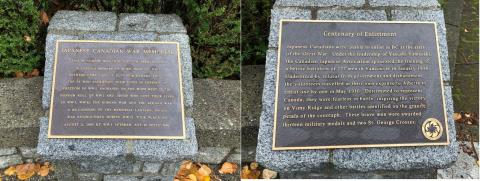
JAPANESE CANADIAN WAR MEMORIAL

THIS MONUMENT WAS DEDICATED ON APRIL 9, 1920
IN LASTING MEMORY OF MORE THAN 222 WHO
ANSWERED THE CALL OF DUTY FOR CANADA AND TO
THE 54 WHO SACRIFICED THEIR LIVES IN DEFENCE OF 
FREEDOM IN WW I. ENGRAVED ON THE MONUMENT IS THE
HONOUR ROLL OF WWI AND THOSE WHO LOST THEIR LIVES
IN WW I, WW II, THE KOREAN WAR AND THE AFGHAN WAR.
A RE-LIGHTING OF THE MEMORIAL LANTERN, WHICH
WAS EXTINGUISED DURING WW II, TOOK PLACE ON
AUGUST 2, 1985 BY WW I VETERAN, SGT. M. MITSUI MM.

(plaque)
Centenary of Enlistment

Japanese Canadians were unable to enlist in BC at the start
of the Great War. Under leadership of Yasushi Yamazaki,
the Canadian Japanese Association sponsored the training of
a heroic battalion of 227 men in Vancouver in January 1916.
Undetered by refusal from government and disbandment,
the volunteers travelled at their own expense to Alberta to 
enlist one by one in May 196. Determined to represent
Canada, they were fearless in battle, inspiring the victory
on Vimy Ridgy and other battles indenitified on the granite
petals of the cenotaph. These brave men were awarded
thirteen military medals and two St. George Crosses.

NATIONAL ASSOCIATION OF JAPANESE CANADIANS

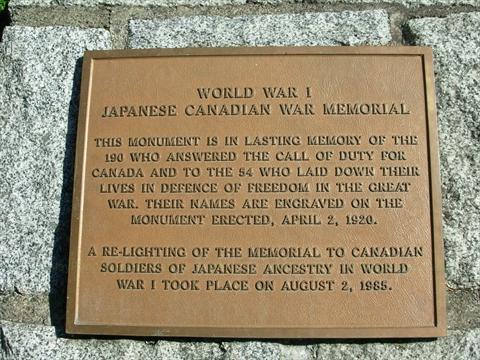
[old dedication plaque that was removed/ancienne plaque commémorative qui a été enlevée]
WORLD WAR I
JAPANESE CANADIAN WAR MEMORIAL
THIS MONUMENT IS IN LASTING MEMORY OF THE
190 WHO ANSWERED THE CALL OF DUTY FOR
CANADA AND TO THE 54 WHO LAID DOWN THEIR
LIVES IN DEFENCE OF FREEDOM IN THE GREAT
WAR. THEIR NAMES ARE ENGRAVED ON THE
MONUMENT ERECTED, APRIL 2, 1920
A RE-LIGHTING OF THE MEMORIAL TO CANADIAN
SOLDIERS OF JAPANESE ANCESTRY IN WORLD
WAR I TOOK PLACE ON AUGUST 2, 1985

Image
Caption
side view
1 of 6 images
Image
Photo Credit
Nikkei National Museum
Caption
Dedication and Centenary plaques
1 of 6 images
Image
Caption
front plaque inscription
1 of 6 images
Image
Photo Credit
Nikkei National Museum
Caption
Old dedication plaque that was removed.
1 of 6 images
Image
Photo Credit
Nikkei National Museum
Caption
Japanese Canadian War Memorial with wreath, group of people including Tadasu Ide and Kochiro Sanmiya - Canadian Japanese Association President c 1920.
1 of 6 images
Image
Caption
Postcard of unveiling.
1 of 6 images
Province
!4v1631273372922!6m8!1m7!1sCAoSLEFGMVFpcFBMMHNiUGU4NEh5OUNSM1FFSlFOSmpqYmxzU2pqZTFCOXRLeFBY!2m2!1d49.3010735!2d-123.1321562!3f102.78512267023461!4f26.130028694703412!5f0.7820865974627469
Body Content

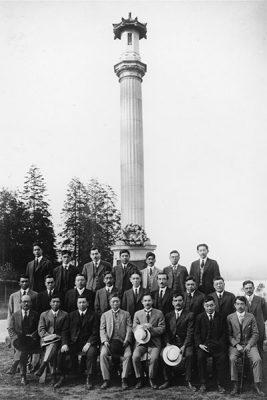
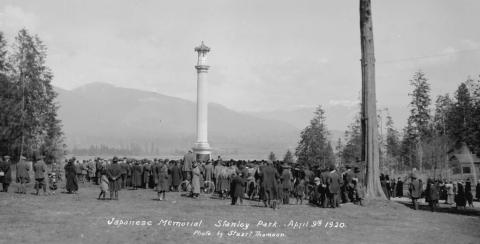
The Japanese Canadian War Memorial was funded by the community and dedicated on April 9, 1920, the third anniversary of the opening day of the Battle of Vimy Ridge. The Canadian Japanese Association, who also funded the training of 227 soldiers in Vancouver from January to May 1916, erected the memorial in memory of the victory at Vimy Ridge, the loss of 54 men and the 168 surviving Japanese Canadian Veterans who returned to Canada. 

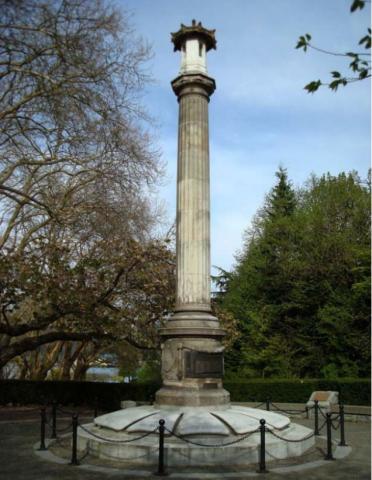
The memorial was placed on gravel in an open field. It was designed by James Anderson Benzie in 1919. On top of the memorial is a Japanese lantern which symbolizes unification between Canada and Japan. The lantern is reminiscent of the ancient Kasuga lanterns at the great shrine at Kyoto, albeit on a larger scale. At the top of the fluted classical central column is a Shinto pagoda form containing the lantern. The 12 “polygons” of the base suggest radiating chrysanthemum petals, emblematic of the Japanese imperial family, but also a symbol of lamentation or grief. 

After the memorial was dedicated, cherry trees were planted, including the shirofugen in 1920, ojochin in 1925, and shirotae in 1932. The cherry trees serve many symbolic interpretations that relate to the fallen soldiers. On May 10, representatives of the Japan Society of Vancouver, the Canadian Japanese Society, the Japanese Consulate, and the Park Board dedicated additional flowering cherry trees. In 1958, as a symbol of the friendship between Canada and Japan, 300 additional cherry trees were donated by the Japanese consul Muneo Tanabe. In 1977, two of the last surviving Japanese Canadian Veterans of the First World War planted akebono cherry trees at the memorial.  

In addition to differences of colour, the cherries selected for the memorial displayed a variety of tree shapes. They also follow a different blooming sequence. The ojochin tree displays evidence of manipulation through the Japanese art of niwaki entailing the pruning, training, and shaping of trees. The tree was trained in the manner of the flowing or streaming branch style of giant bonsai practice, known as Nagare Eda Shitate, and its horizontal orientation specifically suggests the Monkan Shitate, or Branch-Over-Gate form of niwaki. The training of the tree to form an arch of flowering cherry blossoms extending virtually to the monument has produced a canopy that completely envelops visitors standing on the west side of the memorial with cherry blossoms in the spring. 

Its landscape incorporates symbols of regeneration of traumatized humanity reinforcing the remembrance and reverence for the war dead.  Drawing on trees as powerful symbols of identity and renewal, it offered solace and healing to survivors and it holds the potential to continue to resonate with visitors who have been made aware of the profound messages this landscape was intended to convey. 

Among the more remarkable features of the landscape is the relationship of the seasonal cycle to traditions of honouring the war dead. The cherry trees bloom every year around the time of the anniversary of the dedication of the Japanese Canadian War Memorial on 9 April 1920, and of the Battle of Vimy Ridge on the same date in 1917. Almost as quickly as they bloom, the cherry blossoms wither and fall off the trees, symbolic of the fleeting character of life. Yet the foliage and blossoms of the trees return every year in a perpetual renewal of life in the spring. This landscape speaks eloquently to the devotion of Japanese Canadians to the memory of the brave soldiers who fought and died on behalf of their compatriots, and the obligation of survivors to honour their service and sacrifice through these moving symbols of death and restored life.

During the Second World War, the lantern was extinguished. Canada detained 21,000 Japanese-Canadians living in BC under the War Measures Act. Their homes and businesses were sold by the government to pay for their detention. The lantern was not relit until August 2, 1985. In a ceremony, 98 year old Sergeant Masumi Mitsui, who served in the First World War and fought in the Battles of Vimy Ridge and Hill 70, relit the lantern. Sergeant Mitsui was awarded a Military Medal for his leadership at Vimy and Hill 70. The monument was restored and a fence was built around the monument.

The Japanese Canadian War Memorial Committee has subsequently added the names of Japanese Canadians who died in the Second World War,  Korean War and Afghanistan.

In October 2014, the memorial was refurbished, the dedication plaque was replaced, the limestone polished white and the petals on the base cleaned. In February 2015, with funding from Heritage BC's Heritage Legacy Fund, cracks on the marble lantern were filled in and the glass windows were replaced with custom made panes to match the design of their originally established era. The Centenary of Enlistment was installed in 2016.

Today, the cherry blossom trees have grown out and the monument is enclosed by a chain link and a tidy, cement flooring.

City
Vancouver
Country
Type Description
Pillar
Memorial CF Legacy ID
4217
City/Municipality
Surrey
Memorial Number
59025-012
Type
Address
84 Avenue and 160 Street
Location
Fleetwood Community Centre Plaza
in Canada
Yes
GPS Coordinates
49.1554018, -122.7791343
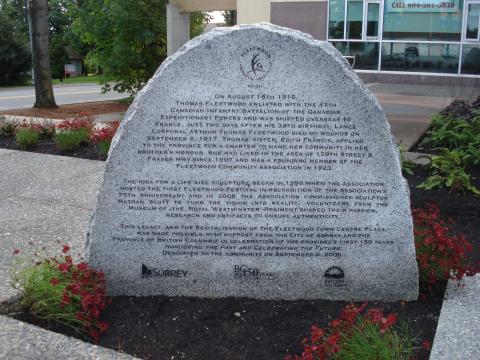
Inscription

[slab/dalle]

ON AUGUST 18TH 1915
THOMAS FLEETWOOD ENLISTED WITH THE 47TH
CANADIAN INFANTRY BATTALION OF THE CANADIAN
EXPEDITIONARY FORCES AND WAS SHIPPED OVERSEAS TO
FRANCE. JUST TWO DAYS AFTER HIS 39TH BIRTHDAY, LANCE
CORPORAL ARTHUR THOMAS FLEETWOOD DIED OF WOUNDS ON
SEPTEMBER 8, 1917. THOMAS' SISTER, EDITH FRANCIS, APPLIED
TO THE PROVINCE FOR A CHARTER TO NAME HER COMMUNITY IN HER
BROTHER'S HONOUR. SHE HAD LIVED IN THE AREA OF 159TH STREET &
FRASER HIGHWAY SINCE 1907 AND WAS A FOUNDING MEMBER OF THE
FLEETWOOD COMMUNITY ASSOCIATION IN 1923.

THE IDEA FOR A LIFE-SIZE SCULPTURE BEGAN IN 1998 WHEN THE ASSOCIATION
HOSTED THE FIRST FLEETWOOD FESTIVAL IN RECOGNITION OF THE ASSOCIATION'S
75TH ANNIVERSARY AND IN 2008 THE ASSOCIATION COMMISSIONED SCULPTOR
NATHAN SCOTT TO TURN THE VISION INTO REALITY. VOLUNTEERS FROM THE
MUSEUM OF THE ROYAL WESTMINSTER REGIMENT SHARED THEIR PASSION,
RESEARCH AND ARTIFACTS TO ENSURE AUTHENTICITY.

THIS LEGACY, AND THE REVITALIZATION OF THE FLEETWOOD TOWN CENTRE PLAZA,
WAS MADE POSSIBLE WITH SUPPORT FROM THE CITY OF SURREY AND THE
PROVINCE OF BRITISH COLUMBIA IN CELEBRATION OF THE PROVINCE'S FIRST 150 YEARS
HONOURING THE PAST AND CELEBRATING THE FUTURE.
DEDICATED TO THE COMMUNITY ON SEPTEMBER 6, 2008.

Image
Caption
slab inscription
1 of 3 images
Image
Caption
Lance Corporal Arthur Thomas Fleetwood Statue
1 of 3 images
Image
Caption
Newspaper on Lance Corporal Arthur Thomas Fleetwood's lap.
1 of 3 images
Province
!4v1730300301084!6m8!1m7!1stZ6E_u2Q7SYbKuFVvGjBhw!2m2!1d49.1554017766881!2d-122.779134263765!3f184.80082951062442!4f-2.3634298695015588!5f1.3880662833989093
Body Content

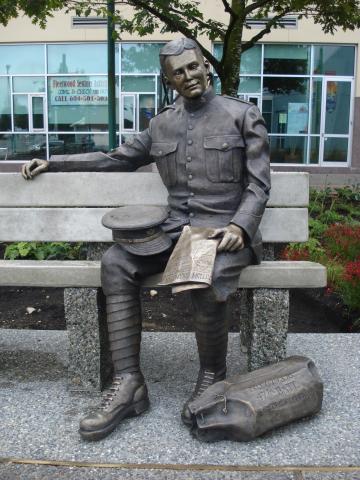
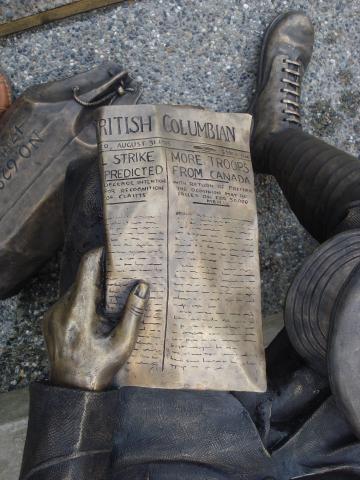
This life-size bronze sculpture depicts a First World War soldier seated on a bench with a newspaper on his lap and a duffle bag at his feet. It portrays and honours Lance Corporal Arthur Thomas Fleetwood, who served in France with the 47th Canadian Infantry Battalion of the Canadian Expeditionary Forces and died there of battle wounds in 1917.

The sculpture, a donation by the Fleetwood Community Association, is intended to inspire pride in the community by marking an aspect of its history and remembering one of its pioneers and soldiers. The memorial had been a vision of the Association’s for 10 years and was unveiled at a dedication ceremony on 6 September 2008. The community of Fleetwood was named in honour of Thomas Fleetwood shortly after his death.

In 1907, newcomers Edith and James Francis settled on land in the vicinity of what is now Fraser Highway and 160th Street. A few years later, other members of Edith’s immediate family, the Fleetwoods, joined them from England. On 18 August 1915, Edith’s brother, Arthur Thomas (Tom) Fleetwood, enlisted with the 47th Canadian Infantry Battalion of the Canadian Expeditionary Forces and was shipped overseas to France. On September 8, 1917, just two days after his 39th birthday, Lance Corporal Arthur Thomas Fleetwood died of wounds received in battle.

City
Surrey
Country
Type Description
Statue, slab
Photo Credit
© Nathan Scott
Memorial CF Legacy ID
12779
City/Municipality
Surrey
Memorial Number
59025-011
Type
Address
16631 Old McLellan Road
Location
Christ Church Surrey Centre
in Canada
Yes
GPS Coordinates
49.1086033, -122.7613667
Inscription

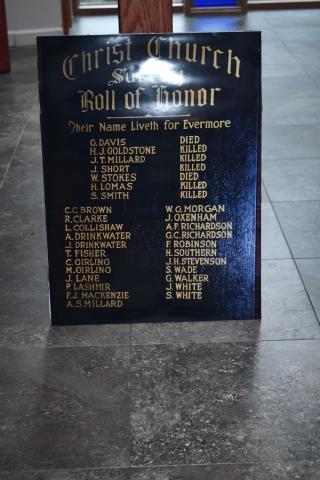
Christ Church
Surrey
Roll of Honor

Their Name Liveth for Evermore

G. DAVIS DIED
H.J. GOLDSTONE KILLED
J.T. MILLARD KILLED
J SHORT KILLED
W STOKES DIED
H LOMAS KILLED
S. SMITH KILLED

C.C. BROWN
R. CLARKE
L. COLLISHAW
A. DRINKWATER
J. DRINKWATER
T. FISHER
C. GIRLING
M. GIRLING
J. LANE
P. LASHMIR
F.J. MACKENZIE
A.S. MILLARD

W.G. MORGAN
J. OXENHAM
A.F. RICHARDSON
G.C. RICHARDSON
F. ROBINSON
H. SOUTHERN
J.H. STEVENSON
S. WADE
G. WALKER
J. WHITE
S. WHITE

Image
Caption
First World War Roll of Honor
War or Conflict Term
Province
!4v1691676718427!6m8!1m7!1sYuc42EQRQg_i_gSCLtzWhQ!2m2!1d49.1086033302708!2d-122.7613667408348!3f310.38231824055043!4f-1.5864292750605955!5f0.5359678794477168
Body Content

This Roll of Honor was erected by Christ Church for the members of their congregation who were killed in the First World War. 

City
Surrey
Country
Type Description
Honour Roll
Photo Credit
Christ Church Surrey Centre
Memorial CF Legacy ID
11928
City/Municipality
Surrey
Memorial Number
59025-010
Type
Location
Next to eastbound lane of Highway 1, just past Exit 57 sign for 192 Street
in Canada
Yes
GPS Coordinates
49.1746995, -122.7095106
Inscription

Charlie's Tree

Province
!4v1622472299679!6m8!1m7!1sD9Zgelm9LL-SGOSs-QclgA!2m2!1d49.17460865574215!2d-122.7090847005985!3f159.08042154482084!4f7.69751460204823!5f1.8165248305246515
Body Content

A 300 year old Douglas Fir tree was named "Charlie's Tree" after a World War I veteran Charlie Perkins planted ivy at its base and lay wreaths on it to honour his fallen First World War pilot friends. Charlie Perkins, who died in 1986, moved to the Fraser Valley from Vancouver around 1907, but subsequently joined the Royal Flying Corp and returned home from the First World War in 1919. First World War flight instructor Charlie Perkins, who after returning to Canada in 1919 planted ivy around the base of the 300-year-old Douglas fir — then on the Perkins property, but for several decades later a common sight on the south side of Highway 1 just west of 192nd Avenue — in memory of the veterans. Wreaths, flags, a white cross and other mementoes were placed at the site.  When plans were announced decades later for the Surrey leg of the Trans-Canada Highway (now Hwy. 1) to run through the glade where the tree stood, Charlie began a fight to save it — a fight that was ultimately successful when ‘Flying’ Phil Gaglardi, head of the highways department at the time, agreed to build around the tree, thus saving it and a small park around it. The tree fell onto Highway 1 near 200th St and caused a minor accident and traffic backup Saturday night, in Surrey, BC., August 1, 2016.

After Charlie Perkins, Great War pilot, centuries old Douglas fir fell in 2016, the Friends of Old Canada Society erected a stone marker:

"The Ivy planted at the base of the great Douglas fir on this site was a memorial to North American World War Royal Flying Corps pilots. The pilots trained in Canada and US by British Columbian Charlie Perkins, the man behind the memorial.

A replacement Douglas fir was planted by the roadside on Highway 1 near 192 Avenue as a Memorial to fallen soldiers in 2018.

The tree is maintained by Royal Canadian Air cadets.

City
Surrey
Country
Type Description
Tree
Memorial CF Legacy ID
9404
City/Municipality
Surrey
Memorial Number
59025-009
Type
in Canada
Yes
GPS Coordinates
0, 0
Image
Caption
front
1 of 3 images
Image
Caption
detail
1 of 3 images
Image
Caption
detail
1 of 3 images
Province
Body Content

This mural was created by Sullivan Heights Secondary School in 2005 as part of the Spirit of Youth Mural Project. "Lest We Forget," is a photo-realist montage of Second World War land, air and sea elements, designed by art teacher, Marc Pelech and his students, Carmen Bright, Nick Castoro and Taryn Sudul. The mural's eclectic mix of vivid hues, sepia-tone and shades of gray is a visual metaphor for the fleeting nature of war memories.

The mural at Heritage Square was demolished in 2018 when the Museum of Surrey expanded. Museum volunteers digitized the mural before its demolition.

City
Surrey
Country
Type Description
Mural
Memorial CF Legacy ID
7794