Ontario

Province Code
ON
City/Municipality
London
Memorial Number
35042-161
Type
Address
753 Elizabeth Street
Location
The Royal Canadian Regiment Museum, Quiet Room
in Canada
Yes
GPS Coordinates
43.0001174, -81.2342379
Inscription

NORTH WEST CANADA 1885

SOUTH AFRICA 1899 - 1900

ROYAL CANADIAN REGIMENT

Image
Photo Credit
The Royal Canadian Regiment Museum
Caption
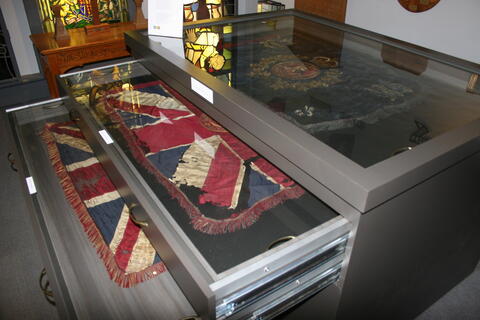
Regimental Colour (top), King’s Colour (drawer 1), South African banner (drawer 2)
1 of 2 images
Image
Photo Credit
The Royal Canadian Regiment Museum
Caption
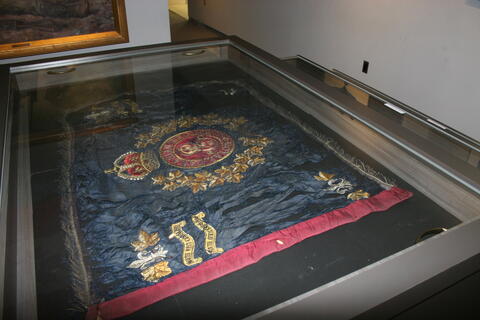
Regimental Colour
1 of 2 images
Province
!4v1668429568671!6m8!1m7!1skFtkZFwN489sbvH9kzllew!2m2!1d43.00011737774564!2d-81.2342378523552!3f72.72585925874867!4f5.860712158069077!5f0.7820865974627469
Body Content

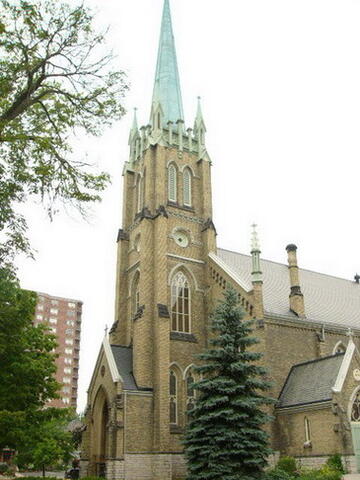
For many years Cronyn Memorial Church was the Garrison Church of The Royal Canadian Regiment and of the Permanent Force Detachments stationed in London following the First World War. The church was originally called The Memorial Church and officially opened on December 14, 1873. 

Prior to the Second World War, it was the custom of The Royal Canadian Regiment to parade to Cronyn Memorial Church on the 3rd Sunday of every month. Their old Colours hung in the chancel of the church. The 1st Battalion of The Royal Canadian Regiment laid up its old Colours at Cronyn Memorial Church on May 26, 1932. In earlier times, Colours played a prominent part in many battles. They served to identify units in battle, often marking the focal point of a struggle. Captured Colours were a prized trophy and attracted enemy attention and inspired much gallantry. By the late 19th and 20th Century, however, they were no longer carried in battle, but their status as the heart and soul of a Regiment continued, and the laying up of Colours signifies and helps keep holy the memories of the men who sacrificed their lives. The affiliation between the church and The Regiment was deep and long lasting.

In 2016, when Bishop Cronyn Church was re-designated, The Royal Canadian Regiment Museum retrieved The Royal Canadian Regiment Colours that were laid there in 1932 and 1991, along with the 1st Battalion, The RCR Queen’s Colour presented in 1959.

Regimental Colour and King’s Colour were presented to The Regiment for the first time in Toronto on 11 October 1901 by the Duke of York, future King George V. It took five years to emblazon the Battle Honours Northwest Canada and South African War on the newly presented Colours. A Union Jack banner, known as the ‘South African banner’, was presented on behalf of King Edward VII in 1904, in Ottawa, by the Governor General of Canada, the Earl of Minto. Trooping the South African banner was customary on Paardeberg Day and other regimental parades until the late 1920s. 
City
London
Country
Type Description
Colours
Memorial CF Legacy ID
11106
City/Municipality
London
Memorial Number
35042-160
Type
Address
753 Elizabeth Street
Location
The Royal Canadian Regiment Museum, Wolseley Barracks
in Canada
Yes
GPS Coordinates
43.0001174, -81.2342379
Inscription

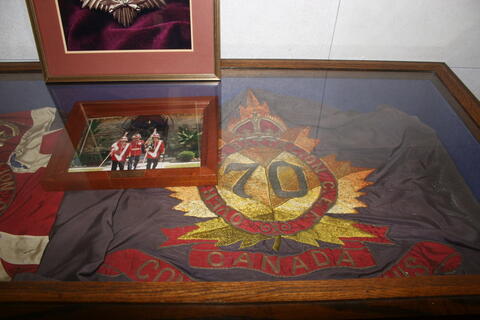
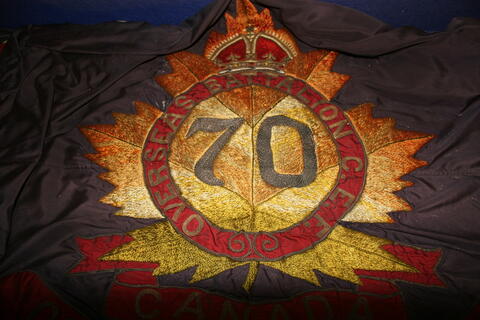
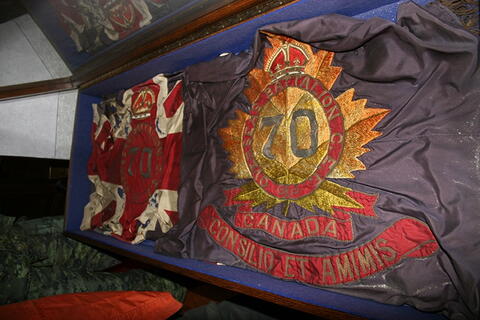
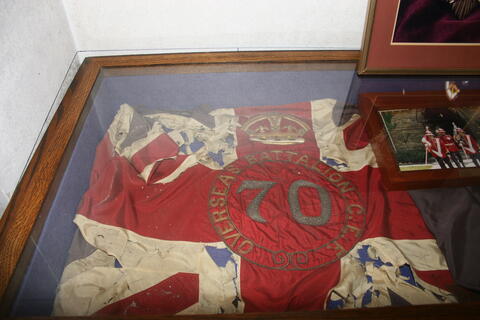
70 OVERSEAS BATTALION C.E.F.

70 OVERSEAS BATTALION C.E.F.
CANADA
CONSILIO ET AMIMIS

Image
Caption
70th Battalion Canadian Expeditionary Force Colours retrieval from Bishop Cronyn Church, 2016.
1 of 4 images
Image
Caption
70th Battalion Canadian Expeditionary Force Colours retrieval from Bishop Cronyn Church, 2016.
1 of 4 images
Image
Caption
70th Battalion Canadian Expeditionary Force Colours retrieval from Bishop Cronyn Church, 2016.
1 of 4 images
Image
Caption
70th Battalion Canadian Expeditionary Force Colours retrieval from Bishop Cronyn Church, 2016.
1 of 4 images
Province
!4v1668429568671!6m8!1m7!1skFtkZFwN489sbvH9kzllew!2m2!1d43.00011737774564!2d-81.2342378523552!3f72.72585925874867!4f5.860712158069077!5f0.7820865974627469
Body Content

For many years Cronyn Memorial Church was the Garrison Church of The Royal Canadian Regiment and of the Permanent Force Detachments stationed in London following the First World War. During the First World War, Bishop Cronyn Memorial was the Garrison Church of the 70th Battalion, Canadian Expeditionary Force (CEF). The church was originally called The Memorial Church and officially opened on December 14, 1873.

70th Battalion CEF deposited their Colours in Cronyn Memorial Church on February 12, 1922. In earlier times, Colours played a prominent part in many battles. They served to identify units in battle, often marking the focal point of a struggle. Captured Colours were a prized trophy and attracted enemy attention and inspired much gallantry. By the late 19th and 20th Century, however, they were no longer carried in battle, but their status as the heart and soul of a Regiment continued, and the laying up of Colours signifies and helps keep holy the memories of the men who sacrificed their lives.

In 2016, when Bishop Cronyn Church was re-designated, The Royal Canadian Regiment Museum retrieved The Royal Canadian Regiment Colours that were laid there in 1932, and 1991. The 70th Battalion CEF Colours were not claimed and the museum agreed with the church’s representative that the museum should take them for safekeeping. 70th Battalion CEF was disbanded shortly after the First World War and are currently in temporary custody with The Royal Canadian Regiment Museum.

City
London
Country
Type Description
Colours
Photo Credit
The Royal Canadian Regiment Museum
Memorial CF Legacy ID
11105
City/Municipality
London
Memorial Number
35042-159
Type
Address
442 William Street
Location
Bishop Cronyn Memorial
in Canada
Yes
GPS Coordinates
42.9891035, -81.2346632
Inscription

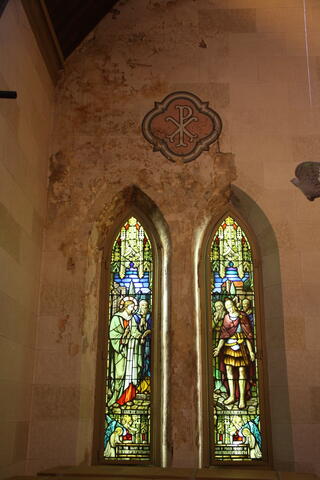
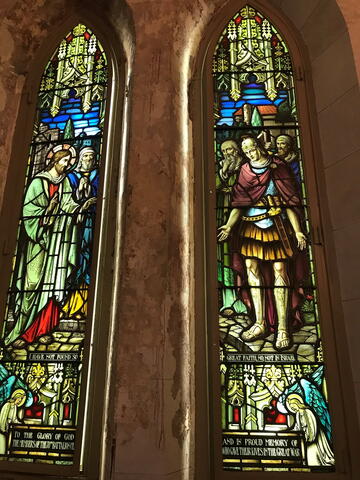
I HAVE NOT FOUND SO GREAT FAITH, NO, NOT IN ISRAEL

TO THE GLORY OF GOD AND IN PROUD MEMORY OF
THE MEMBERS OF THE 70TH BATTALION CEF WHO GAVE THEIR LIVES IN THE GREAT WAR

Image
Photo Credit
C. Cody Barteet, Anahí González
Caption
70th Battalion Canadian Expeditionary Force Great War Window
1 of 2 images
Image
Photo Credit
C. Cody Barteet
Caption
inscription
1 of 2 images
Province
!4v1650566760212!6m8!1m7!1sWRGAY8hw9hmitV_lgXVofw!2m2!1d42.98910353546118!2d-81.23466320842809!3f77.30553860581648!4f4.1098271879434805!5f0.7820865974627469
Body Content

The Great War Window was created in 1936 by Robert McCausland Limited, Toronto. Its narrative corresponds to Christ’s visit to Capernaum and he was approached by a centurion to help his suffering servant. Christ indicated he would travel to the Centurion’s house. The soldier indicated Christ didn’t have to return to his house as his word was enough to save the man. Christ admires his faith and compares it to those in Israel. The scripture is from Luke 7:9.

During the First World War, Bishop Cronyn Memorial was the Garrison Church of the 70th Battalion, Canadian Expeditionary Force. The church was originally called The Memorial Church and officially opened on December 14, 1873.

City
London
Country
Type Description
Stained glass window
Memorial CF Legacy ID
11078
City/Municipality
London
Memorial Number
35042-158
Type
Address
280 St James Street
Location
St. John the Evangelist Anglican Church
in Canada
Yes
GPS Coordinates
42.9983056, -81.251698
Inscription

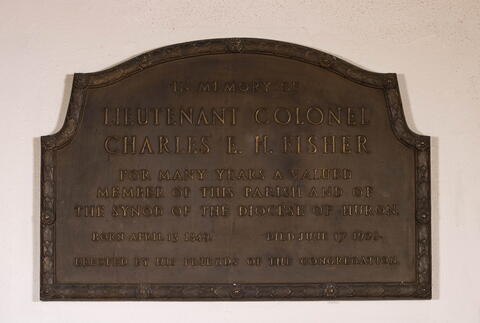
IN MEMORY OF
LIEUTENANT COLONEL
CHARLES E. H. FISHER

FOR MANY YEARS A VALUED
MEMBER OF THIS PARISH AND OF
THE SYNOD OF THE DIOCESE OF HURON.

BORN APRIL 13 1849.     DIED JUNE 17 1928.

ERECTED BY HIS FRIENDS OF THE CONGREGATION.

Image
Caption
plaque
Province
!4v1662549219189!6m8!1m7!1s1TlbH58eQkGE7U_qQVMBPA!2m2!1d42.99830562171066!2d-81.25169796559446!3f343.9697333743502!4f4.791179387832344!5f0.7820865974627469
Body Content

Lieutenant Colonel Charles E. H. Fisher was born 13 April 1849 in Belleville, Ontario, son of Dr. Alfred and Elizabeth Fisher. He was educated in the Sarnia schools and entered the service of the Postal Department at Sarnia, where he remained for five years, after which he was appointed to the Railway Mail Service. In 1881, he was promoted to the assistant inspectorship of the London Division, and was appointed Post Office Inspector in 1913. 

He joined the 27th Battalion, Sinclair Borderers, going through all ranks and retiring 1892, retaining rank of Lieutenant-Colonel. Charles took part in the Fenian Raid in 1866 as a full private in 1st Provisional Brigade, stationed at Sarnia. One of his five sons, Dr. Charles of Detroit, served with troops in No. 2 Stationery Hospital, France, 1st Expeditionary Force.

This plaque was erected by members of the St. John the Evangelist Anglican Church in memory of Lieutenant Colonel Charles E. H. Fisher.

City
London
Country
Type Description
Plaque
Photo Credit
Cody Barteet
Memorial CF Legacy ID
10962
City/Municipality
London
Memorial Number
35042-157
Type
Address
Oxford Drive
Location
Lawson Hall, Western University
in Canada
Yes
GPS Coordinates
43.0085976, -81.2745943
Inscription

[plaque]
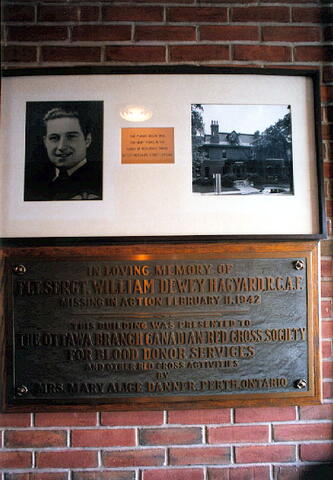
THE PLAQUE BELOW WAS
FOR MANY YEARS IN THE
LOBBY OF RED CROSS HOUSE
AT 237 METCALFE STREET, OTTAWA

[plaque]
IN LOVING MEMORY OF
FLT. SERGT. WILLIAM DEWEY HAGYARD, R.C.A.F.
MISSING IN ACTION FEBRUARY 11, 1942

THIS BUILDING WAS PRESENTED TO
THE OTTAWA BRANCH CANADIAN RED CROSS SOCIETY
FOR BLOOD DONOR SERVICES
AND OTHER RED CROSS ACTIVITIES
BY
MRS. MARY ALICE DANNER, PERTH, ONTARIO.

Image
Photo Credit
Royal Canadian Legion Branch 625/Legion royale canadienne, filale no 625
Caption
front view
War or Conflict Term
Province
!4v1625265201898!6m8!1m7!1sql5T6AFyV8F_0kccpj7mVw!2m2!1d43.00859763400268!2d-81.27459427021205!3f98.54135736561892!4f10.406918118225135!5f0.7820865974627469
Body Content

This memorial is dedicated to William Dewey Hagyard. It was erected by Mrs. Mary Alice Danner in the lobby of Red Cross House, 237 Metcalfe Street, Ottawa. 

It is now in the possession of the Department of History at Western University. Once the campus re-opens post-COVID, the plaque will be mounted on a wall in a public area of Lawson Hall, along with some explanatory material.

City
London
Country
Type Description
Plaque - bronze, photos
Memorial CF Legacy ID
10530
City/Municipality
London
Memorial Number
35042-156
Type
Address
280 St James Street
Location
St. John the Evangelist Anglican Church
in Canada
Yes
GPS Coordinates
42.9983477, -81.2515444
Inscription

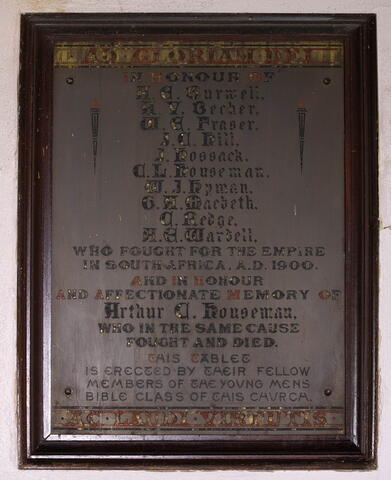
• AD • GLORIAM • DEI • 
IN HONOUR OF
A. E. Burwell,
A. V. Becher,
W. E. Fraser,
J. C. Hill,
J. Hossack,
C. L. Houseman,
W. J. Hyman,
G. A. Macbeth,
C. Redge,
A. E. Wardell,

WHO FOUGHT FOR THE EMPIRE
IN SOUTH AFRICA. A.D. 1900.
AND IN HONOUR
AND AFFECTIONALTE MEMORY OF
ARTHUR C. HOUSEMAN,
WHO IN THE SAME CAUSE
FOUGHT AND DIED.

THIS TABLET
IS ERECTED BY THEIR FELLOW
MEMBERS OF THE YOUNG MENS
BIBLE CLASS OF THIS CHURCH.

• AC • LAUDI • VIRTUTIS • 

Image
Photo Credit
Anahi Gonzalez
Caption
plaque
War or Conflict Term
Province
!4v1622049558571!6m8!1m7!1sxM4aRjGiciFTlbWYjL9a9A!2m2!1d42.99834766945759!2d-81.25154437571653!3f335.08815400982814!4f1.0199448542329606!5f0.7820865974627469
Body Content

The South African War Plaque was unveiled in 1901, 2nd anniversary of the October 25, 1899 departure to South Africa. 

Eleven men from the St. John’s Bible Class and St. John’s Athletic Club volunteered for the South African War. Six joined B Company of the First Canadian Contingent to South Africa: Sergeant Macbeth, Privates Burwell, Hill, Hyman, Redge, and Wardell. Private Becher was a member of the reinforcement group contingent. Private Frasher joined A squadron of the First Battalion of the Canadian Mounted Rifles of the second Canadian Contingent. Arthur C. Houseman was a civil surgeon for South African Light Horse Cavalry unit. He was cited for bravery by British Commander-in-Chief, General Sir Redevers Buller (London England, Gazette of Feb 1901). He was killed in the war and buried in South Africa. The assignments for C.L. Houseman and J. Hossack are not known.

The eleven men left left London on October 25, 1899 as part of a grand parade. At 1:00 PM they left Wolseley Baracks and marched to Victoria Park. Upon entering the park the crowd and school children began to sing, “The Soldiers of the Queen.” After a short ceremony they marched down Richmond Avenue to the old Grand Trunk Railway station and were addressed by Prime Minister Sir Wilfred Laurier. Upon boarding the train, a band played: “God Save the Queen” and “Auld Lang Syne” (London Free Press 26 October 1899 and London Advertiser 26 October 1899).

In South Africa, they took part in the Zand River fight, Battle of Paardeberg and the surrender of Piet Cronje’s Boer Army on February 27, 1900, along with Lord Roberts’ march on Pretoria. 

City
London
Country
Type Description
Plaque
Memorial CF Legacy ID
10505
City/Municipality
London
Memorial Number
35042-155
Type
Address
280 St James Street
Location
St. John the Evangelist Anglican Church
in Canada
Yes
GPS Coordinates
42.9983477, -81.2515444
Inscription

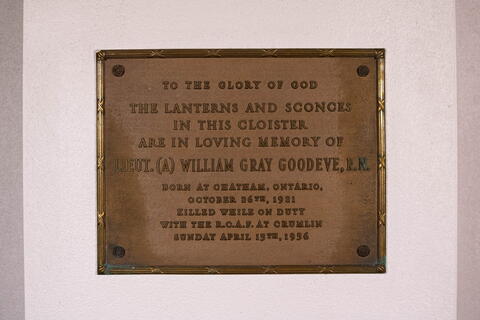
TO THE GLORY OF GOD
THE LANTERNS AND SCONCES
IN THIS CLOISTER
ARE IN LOVING MEMORY OF
LIEUT. (A) WILLIAM GRAY GOODEVE, R.N.
BORN AT CHATHAM, ONTARIO,
OCTOBER 26TH, 1921
KILLED WHILE ON DUTY
WITH THE R.C.A.F. AT CRUMLIN
SUNDAY APRIL 15TH, 1956

Image
Photo Credit
Anahi Gonzalez
Caption
plaque
War or Conflict Term
Province
!4v1622049558571!6m8!1m7!1sxM4aRjGiciFTlbWYjL9a9A!2m2!1d42.99834766945759!2d-81.25154437571653!3f335.08815400982814!4f1.0199448542329606!5f0.7820865974627469
Body Content

Lieutenant William Gray Goodeve Plaque.

City
London
Country
Type Description
Plaque
Memorial CF Legacy ID
10503
City/Municipality
London
Memorial Number
35042-154
Type
Address
727 Southdale Road East
Location
Parish of Holy Trinity St.Stephen's Anglican Memorial
in Canada
Yes
GPS Coordinates
42.9436661, -81.2245337
Inscription

[stone]
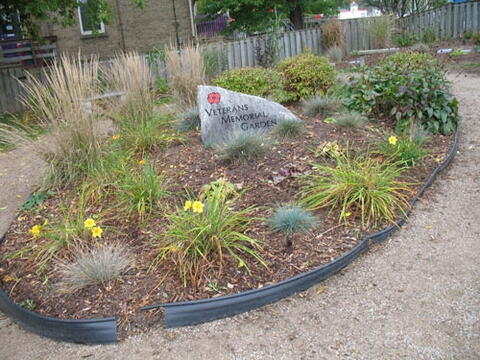
VETERANS
MEMORIAL
GARDEN

[bench]
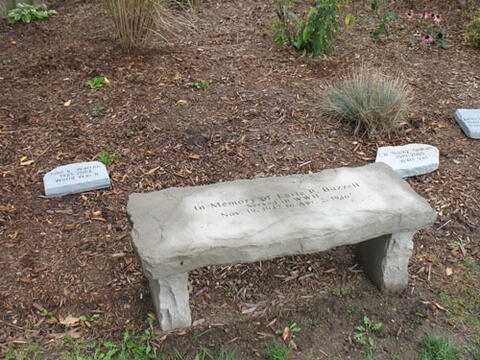
In Memory of Earle P. Buzzell
Served in WWII
Nov. 19, 1942 to Apr. 2, 1945

[stones]
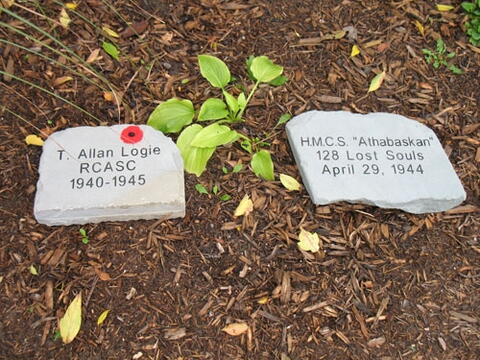
T. Allan Logie
RCASC
1940-1945

H.M.C.S. "Athabaskan"
128 Lost Souls
April 29, 1944

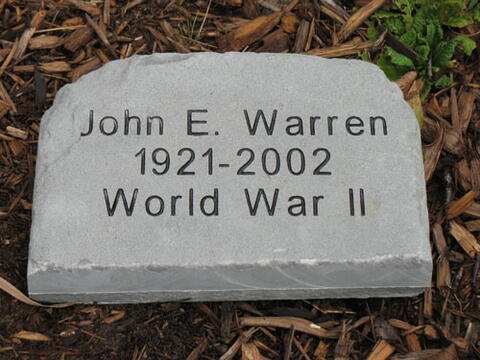
John E. Warren
1921-2002
World War II

Image
Photo Credit
Holy Trinity St. Stephens Memorial Anglican/Anglicane Holy Trinity St. Stephen’s
Caption
Veterans Memorial Garden stone with a large poppy
1 of 4 images
Image
Photo Credit
Holy Trinity St. Stephens Memorial Anglican/Anglicane Holy Trinity St. Stephen’s
Caption
bench
1 of 4 images
Image
Photo Credit
Holy Trinity St. Stephens Memorial Anglican/Anglicane Holy Trinity St. Stephen’s
Caption
stones
1 of 4 images
Image
Photo Credit
Holy Trinity St. Stephens Memorial Anglican/Anglicane Holy Trinity St. Stephen’s
Caption
John E Warren stone
1 of 4 images
War or Conflict Term
Province
!4v1628773523687!6m8!1m7!1sYc5mUhPyuEhrQF1D3aI2bg!2m2!1d42.94365225317618!2d-81.22471678157004!3f152.632653921032!4f8.676687349470356!5f1.9587109090973311
Body Content

As part of the celebration of 60 years of ministry at St. Stephen's Memorial, the Veterans Memorial Garden was established. The dedication of stones was held on October 6, 2013. The center piece is a large stone engraved with a red poppy and in the surrounding area are benches and stones placed in memory of Veterans.  

St. Stephen's was founded by Veterans of the Second World War, who called this area home. In the late 1940's, the area just south of the city of London was designated for Veterans Land Settlement. Those who had served in the Second World War were home and their families were growing. A strong affection for the Veterans who started the church was evidenced during the construction and dedication of the Veterans Memorial Garden.


City
London
Country
Type Description
Garden
Memorial CF Legacy ID
10436
City/Municipality
Norfolk
Memorial Number
35042-153
Type
Address
88 La Salette Road
Location
La Salette Historic Church & Community Hall
in Canada
Yes
GPS Coordinates
42.9020399, -80.5044025
Inscription

IN LOVING MEMORY OF
PRIVATE FRANCIS L. MURPHY
DONATED BY THE FAMILY

Image
Photo Credit
Rhonda Franks,John Otto, Louise Garnett
Caption
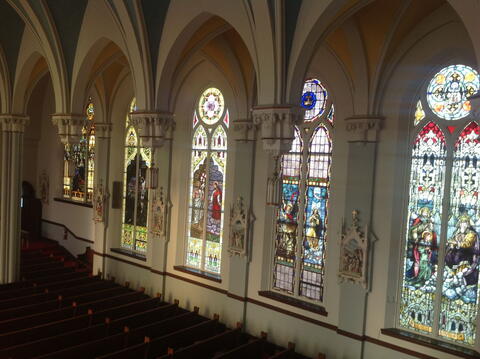
church interior, west side toward the front
1 of 2 images
Image
Photo Credit
Rhonda Franks,John Otto, Louise Garnett
Caption
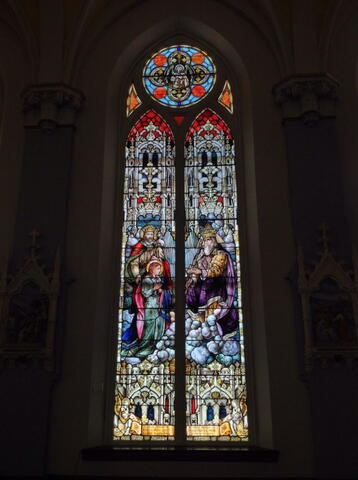
stained glass window
1 of 2 images
War or Conflict Term
Province
Body Content

A stained glass window in the south west wall of the LaSalette Church pays tribute to Private Francis Leoland Murphy. He was born in 1885 in Silver Hill to John and Elsie Forbes Murphy. Francis enlisted in the 133rd on February 9, 1916. He had been a member of the 39th Militia and was a farmer. He was college educated and an accomplished writer who sent a steady stream of letters home to the Simcoe Reformer describing days in training at Camp Borden and later in England.

Francis and his friend, John Carnaham of St Williams, were placed in the 29th Battalion, British Columbia. John was killed on April 9, 1917 at the battle of Vimy Ridge. It had a profound impact on Francis. He wrote a heart rendering story of how he visited a church in France and asked M. le Cure for some of his red roses to lay on his friend’s grave. Francis was killed in action four months later on August 21 at the Battle of Hill 70. He has no known grave. His name is inscribed on the Vimy Memorial and on the window that reflects the sorrow of a grieving family.

The La Salette Historic Church, formerly known as Our Lady of La Salette Roman Catholic Church was opened in 1881. It was destroyed by a fire in March 1913. The current building was built in the same location and opened in April 1914. The La Salette Area Rural Roots Community Hall Corporation acquired it in 2012. 

City
Norfolk
Country
Type Description
Stained Glass Window
Memorial CF Legacy ID
10404
City/Municipality
London
Memorial Number
35042-152
Type
Address
350 Queens Avenue
Location
First-St. Andrew's United Church
in Canada
Yes
GPS Coordinates
42.9871096, -81.2426626
Image
Photo Credit
www.musiqueorguequebec.ca
Caption
First-St. Andrew's United Church stained glass windows
1 of 2 images
Image
Photo Credit
www.musiqueorguequebec.ca
Caption
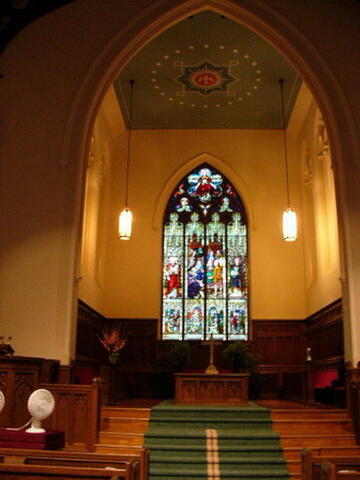
First-St. Andrew's United Church
1 of 2 images
Province
!4v1629727937576!6m8!1m7!1ssb-oLKjwJlKiyRECN7IOYg!2m2!1d42.98710962505999!2d-81.2426626029001!3f341.6340832075998!4f23.673736694693233!5f1.093872792849"
Body Content

The War memorial stained glass windows at First-St. Andrew's United Church were dedicated in 1949. First-St. Andrew's United Church has stood at the corner of Waterloo Street & Queens Avenue since 1868, one short year after the Confederation of Canada.

City
London
Country
Type Description
Stained Glass Window
Photo Credit
Victoria Edwards
Memorial CF Legacy ID
10389